Compare to Market Standard: A Faster Way to See What's Market (and What Isn't)

Upload a contract, and Lizzy will benchmark it clause-by-clause against market practice - flagging what is off-market and explaining why, with clear, practical guidance you can act on.
Why “Compare to Market Standard” Matters
In legal work, the question is rarely just, “What does this say?” It is, “Is this normal?” A limitation of liability can sound reasonable and still be aggressive for the category. A termination notice period can look harmless and still be non-standard in that market.
Compare to Market Standard is built for that exact gap: not just understanding the contract, but placing it on the market spectrum - quickly and consistently across the whole document.
What Compare to Market Standard Is
Compare to Market Standard is a new workflow in LizzyAI. You upload a document and ask Lizzy to evaluate, based on the clauses and specific details inside them, whether the terms are market (typical/standard) or non-market (unusual, skewed, or higher-risk).
Instead of a generic summary, you get a structured, clause-aware assessment: what Lizzy found, where it appears in the document, whether it aligns with market practice, and what to do next.
How It Works
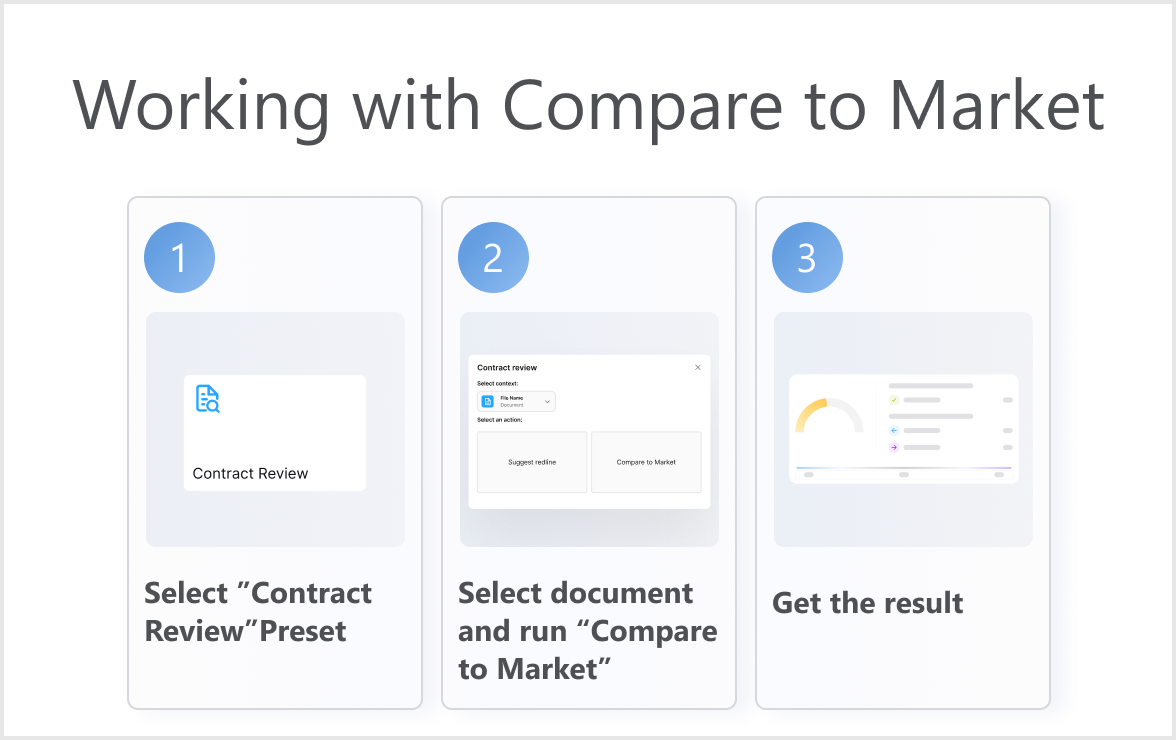
The workflow is designed to mirror how legal teams actually review - just faster and more repeatable:
- Upload your agreement.
- Choose Compare to Market Standard.
- Lizzy reviews clause-by-clause (including key details within clauses, not just headings).
- For each relevant topic, Lizzy flags: Market / Non-Market.
You get practical guidance: what is unusual and why it matters.
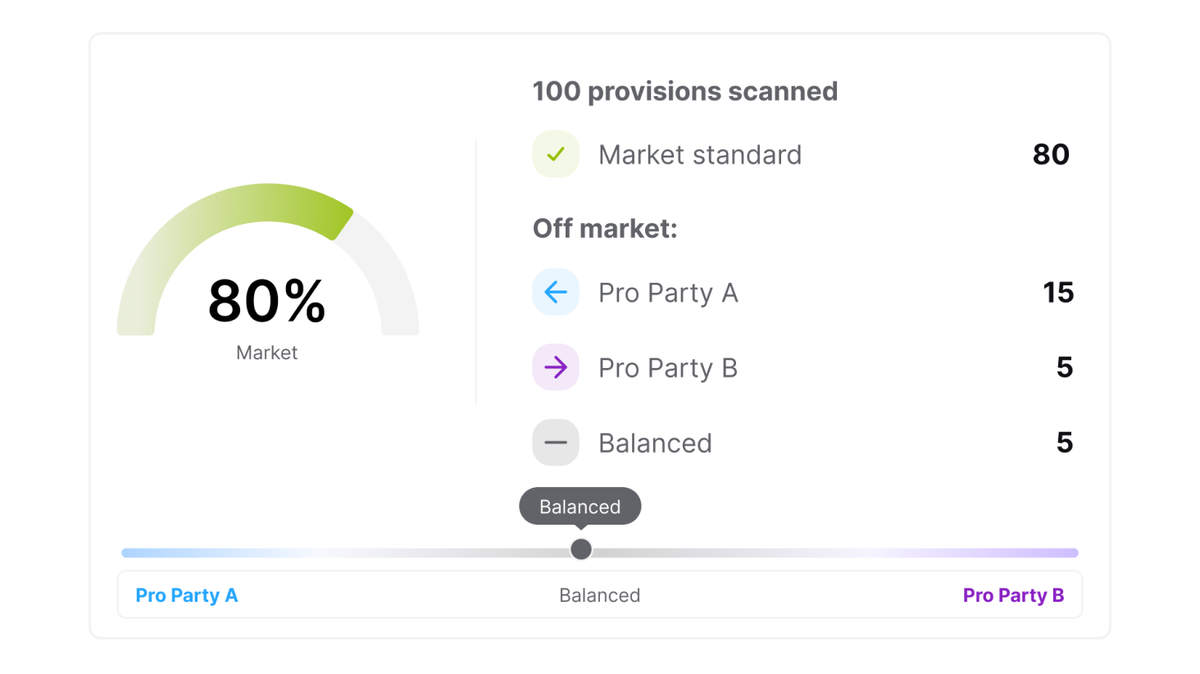
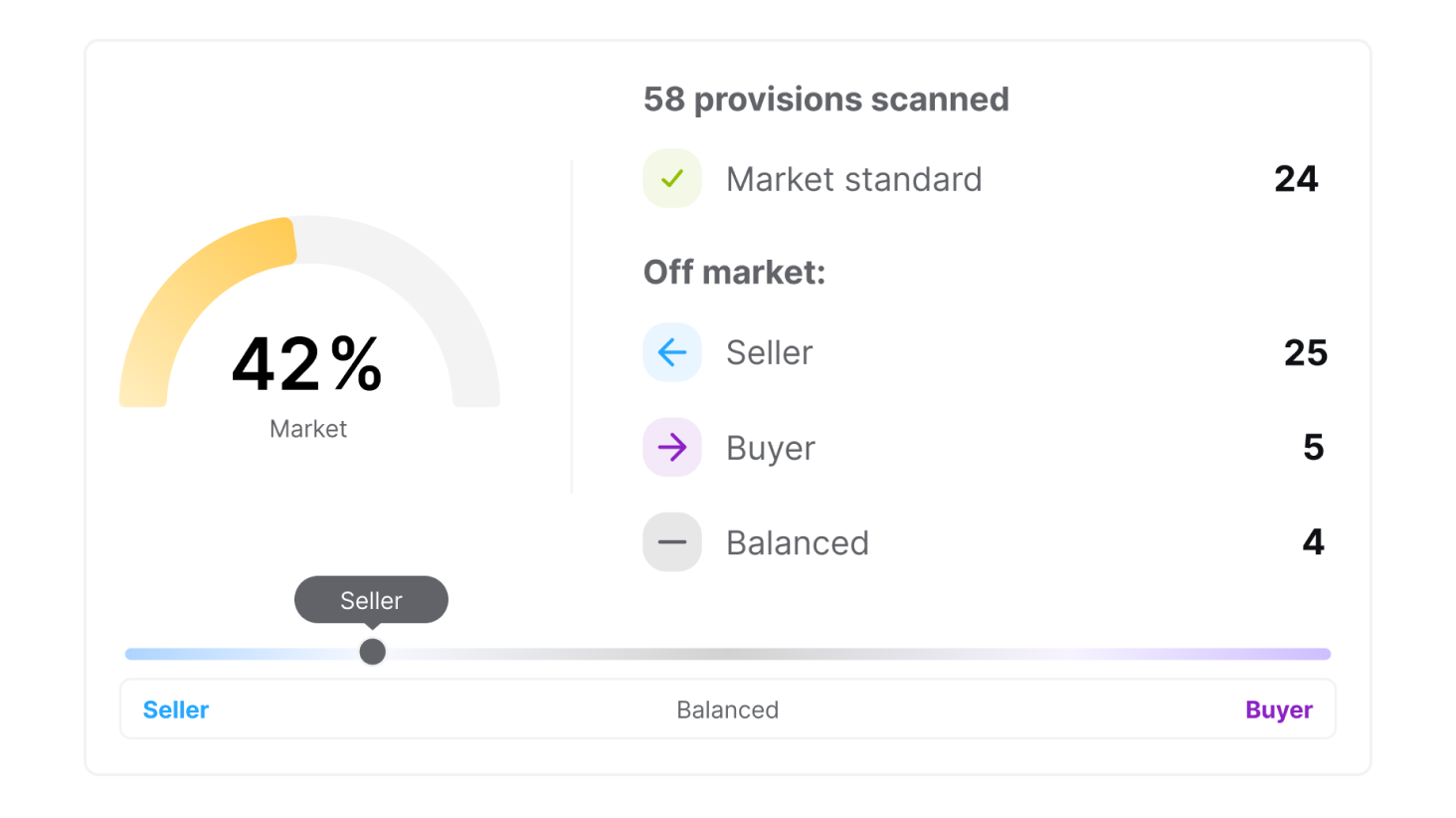
The analysis is not just text - it includes a visual “market barometer”
Compare to Market Standard is designed to be immediately scannable. So, alongside the written clause-by-clause findings, Lizzy’s analysis also includes a graph that visually summarizes where the document sits across key topics.
From “Market Check” to “Make It Market”
Flagging what is non-market is only half the job. The other half is getting to a version you can actually send.
That’s why, at the end of Lizzy’s Compare to Market Standard analysis, Lizzy will ask whether you want her to apply the necessary changes to the document to bring the non-market clauses back in line with market terms. In other words: once you see what is off-market, you can immediately move from diagnosis to execution.
What Makes It Different from a Normal Review or Summary
A good summary tells you what is in the contract. A good legal review tells you what might be risky. Compare to Market Standard answers a different - and often more operational - question:
How does this compare to what is typically accepted in the market?
That distinction is huge. Plenty of clauses are “legally okay” but still non-market. Knowing that early helps you decide what to push for, what to trade, and what to leave alone.
This is the start of something bigger
Today, "Compare to Market Standard" is intentionally designed to be general-purpose: it works across various contract types, allowing you to upload almost any agreement and receive a market-alignment analysis.
But the bigger vision is where this gets exciting. “Market” is not one universal standard—it differs for different deal types. This workflow is a foundation to compare your document against specific, recognized benchmark documents for that deal type (not just a generic AI analysis): for example, reviewing a Stock Purchase Agreement against the NVCA model documents, an M&A purchase agreement against the SRS Market Standard Guide, or an EPC/turnkey contract against the relevant FIDIC book.
Same experience. Same clarity. But anchored to the right benchmark for the transaction you are actually doing.
The takeaway
“Compare to Market Standard" makes contract review more practical: not only “what does it say?” and not only “is it risky?”—but “is it market?” And that is often the difference between a review that is informative and a review that actually moves the deal forward.